

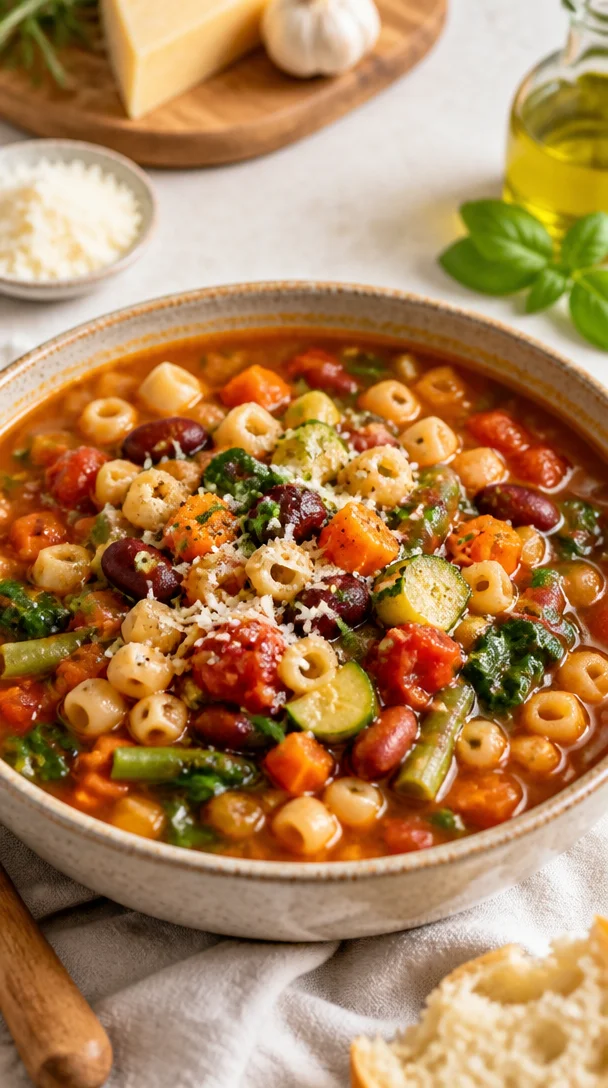
A Hearty Embrace of Minestrone
Welcome to my culinary corner! I’m excited to explore one of the most comforting and vibrant dishes you’ll ever encounter: Minestrone. This Italian classic isn’t just food; it’s a warm embrace, a celebration of seasonal vegetables, and a delicious way to incorporate beans and pasta into your meals. It whispers stories of grandma’s kitchen, bustling market stalls, and the tantalizing aromas of ripe tomatoes and fresh herbs filling the air.
Minestrone is more than just soup; it’s a canvas for creativity and a perfect way to clean out your fridge. You can adapt it according to the season, your pantry’s inventory, or your family’s preferences. Simply put, minestrone is about connection—connection to tradition, to each other, and to the flavors that bring us joy. In this blog post, I’ll share a cherished memory, guide you through the ingredients, and provide a step-by-step walkthrough of my minestrone recipe that will surely become a staple in your kitchen.
A Fond Memory: Homemade Minestrone
As with many great recipes, my love for minestrone began at home. I remember one brisk autumn evening when my family gathered in the kitchen. Aromatic steam curled from a pot bubbling gently on the stove while the kitchen was filled with laughter and the clinking of spoons. My mom had decided to whip up a big batch of her famous minestrone, insisting that we use whatever vegetables we had on hand.
As a child, there was pure magic in watching her chop carrots, carry in fresh herbs from the garden, and crack open a can of beans. The sizzle, the comforting smells filling the air; it was an experience that stitched together my fondest memories. Once the soup was ready, we would all gather around the table, bowls steaming in front of us, savoring every sip. That was not just a meal but a moment we shared, reminding each of us that food is a universal language of love and laughter. To this day, a bowl of minestrone ignites that warm nostalgia, transporting me back to those cherished evenings.
Ingredients
Here’s what you’ll need to make a heartwarming pot of minestrone:
- Olive oil: A must for sautéing; it adds a delicious richness. You can substitute it with avocado oil or sunflower oil for a lighter flavor.
- Onion: The base of nearly all soups, imparting a sweet depth. Yellow or white onions work perfectly; shallots or red onions can add a touch of sweetness too.
- Garlic: This pungent herb is essential for aroma, bringing a certain warmth. If you’re not a fan of fresh, use garlic powder but remember fresh has an unbeatable taste.
- Carrots: Sweet and vibrant, they add color. Substitute with parsnips or sweet potatoes for a twist.
- Celery: For crunch and flavor, it’s the backbone of any good soup base. You could also use fennel for a unique anise flavor.
- Zucchini: Tender and mild, zucchini absorbs flavors beautifully. Substitute with yellow squash or add bell peppers for variety.
- Green beans: They add texture. Fresh, frozen, or even canned work! Just adjust cooking time accordingly.
- Canned diced tomatoes: A critical ingredient that brings acidity and sweetness. You can replace it with fresh tomatoes but ensure they’re ripe and juicy.
- Vegetable or chicken stock: This is your soup’s foundation. Homemade is best, but low-sodium versions from the store work well too. Adjust the salt as needed if you’re using store-bought stock.
- Cannellini or kidney beans: Packed with protein and fiber, they make the soup hearty. If you’d like a different taste, chickpeas or lentils can be excellent substitutes.
- Pasta: Use small shapes like ditalini or elbows. For gluten-free options, try rice or quinoa!
- Herbs: A mix of thyme, bay leaf, and fresh basil will elevate the flavor. Other herbs like rosemary or parsley can also add a delightful twist.
Step-by-Step Instructions
-
Sauté the Aromatics: Start by heating about two tablespoons of olive oil in a large pot over medium heat. Once it’s shimmering, add the chopped onions, stirring occasionally. Let them sweat for about 5 minutes until translucent, then add minced garlic. Cook for an additional minute until aromatic. Here’s a tip: make sure not to burn the garlic, as it can turn bitter!
-
Add Veggies: Next, toss in the diced carrots and celery. Stir them around for about 5-7 minutes until slightly softened. This is crucial because it builds the flavor base. Don’t rush this step; good things take time!
-
In with the Zucchini and Green Beans: Add the chopped zucchini and green beans to the pot. Stir once more, letting everything cook and mingle for about 4 minutes. You’re aiming for a gentle cook—not mushy, just tender!
-
Tomatoes & Broth: Pour in your canned tomatoes along with their juices, followed by your stock of choice. Give it all a good stir and bring the pot to a gentle simmer. You’ll want to season with salt, pepper, and your herbs here—add a couple of sprigs of thyme and a bay leaf. Let this simmer away for about 10-15 minutes, stirring occasionally. The longer it simmers, the deeper the flavor!
-
Beans & Pasta: Now, it’s time to add the beans and your pasta of choice. If you’re using small pasta, it shouldn’t take long—usually around 8-10 minutes. If you’re using something like lentils, add a bit more time. Toss in the chopped basil just before serving; it enhances the freshness of every bite!
-
Taste Test: Always a critical step! Before serving, taste the soup and adjust with more salt, pepper, or herbs if needed. This is your masterpiece; polish it to perfection.
Serving Suggestions
Minestrone is all about comfort, so serve it in deep bowls topped with a generous sprinkle of grated Parmesan cheese and a drizzle of high-quality olive oil for added richness. Pair it with crusty bread or a side of garlic bread, and you’ve got the perfect meal. To add a little flair, try garnishing with fresh basil leaves or crushed red pepper flakes for some heat. Serve it alongside a simple green salad for a balanced dinner, and you’re all set for cozy, comforting vibes.
Recipe Variations
- Pasta Swap: Instead of traditional pasta, try whole grain, gluten-free, or even zucchini noodles (zoodles) for a healthier version.
- Seasonal Variants: Swap in seasonal veggies as you see fit! In winter, root vegetables are delightful, while in spring, fresh peas and asparagus can brighten your minestrone.
- Spicy Kick: If you enjoy a bit of heat, add a pinch of red pepper flakes while sautéing the onions or include some diced jalapenos.
- Protein-Packed: For an extra protein boost, consider adding some diced cooked chicken or turkey, or even some crispy bacon for added depth.
- Vegan Delight: Keep it entirely plant-based by ensuring the stock is vegetable-based and forgoing cheese. Try nutritional yeast for a cheesy flavor without dairy!
Chef’s Notes
Minestrone is one of those dishes that evolve over time. My mom used to make it in a different way each time, using whatever ingredients she had left in the fridge. It wasn’t just soup; it was her way of teaching us resourcefulness, showing us how to improvise in the kitchen creatively. The best part about minestrone? It tastes even better the next day! I often make a big batch on Sundays and enjoy it throughout the week, making it a part of my own culinary traditions.
FAQs and Troubleshooting
-
My minestrone is too thick: If you find your minestrone is thicker than you’d like, simply thin it out with additional stock or water until it reaches your desired consistency.
-
Can I use frozen vegetables? Absolutely! Frozen vegetables work well and can save time. Just remember to add them later in the cooking process as they might cook faster than fresh veggies.
-
Why did my beans turn mushy? If using dry beans, be sure to soak and cook them prior to adding to avoid mushiness. Canned beans should be added towards the end of cooking to keep them intact.
-
Can I make this in a slow cooker? Yes! Follow the same saute-ing steps first, then transfer everything to a slow cooker for 4-6 hours on low heat. You’ll want to add the pasta in the last 30 minutes of cooking.
Nutritional Info
Minestrone is not only hearty but healthy too! A typical serving contains roughly 300 calories, packed with protein from beans and fiber from the various veggies. It’s low in fat (especially if you hold back on the cheese) and loaded with vitamins and minerals, making it an excellent choice for those looking to eat healthier without sacrificing flavor. This dish is also vegetarian, easily adaptable to vegan, and can fit well into gluten-free diets.
Final Thoughts
Creating a pot of minestrone is more than just cooking; it’s about connecting with tradition and flavor. Each spoonful brings with it memories and warmth, making it the perfect choice for gatherings or a simple dinner at home. The beauty of minestrone is its versatility, transforming with the seasons and your cravings. So gather your ingredients, put on your apron, and let’s fill your kitchen with scents reminiscent of my childhood. Embrace the joy of cooking, and create a dish that brings happiness to your table. Bon appétit!
PrintHearty Minestrone

A comforting and vibrant Italian classic, Minestrone is a hearty soup filled with seasonal vegetables, beans, and pasta that brings warmth and joy to any meal.
- Prep Time: 15 minutes
- Cook Time: 30 minutes
- Total Time: 45 minutes
- Yield: 4 servings 1x
- Category: Main Course
- Method: Stovetop
- Cuisine: Italian
- Diet: Vegetarian
Ingredients
- 2 tablespoons Olive oil
- 1 Onion, chopped
- 3 cloves Garlic, minced
- 2 Carrots, diced
- 2 stalks Celery, diced
- 1 Zucchini, chopped
- 1 cup Green beans, trimmed and cut
- 1 can (14.5 oz) Canned diced tomatoes
- 4 cups Vegetable or chicken stock
- 1 can (15 oz) Cannellini or kidney beans, drained and rinsed
- 1 cup Pasta (ditalini or elbows)
- Herbs: thyme, bay leaf, and fresh basil
Instructions
- Sauté the aromatics: Heat olive oil in a large pot over medium heat. Add onions and sweat for about 5 minutes until translucent, then add garlic and cook for an additional minute.
- Add veggies: Toss in diced carrots and celery, stirring for about 5-7 minutes until slightly softened.
- In with the zucchini and green beans: Add chopped zucchini and green beans, cooking gently for about 4 minutes.
- Pour in canned tomatoes along with their juices and stock. Season with salt, pepper, and herbs, then simmer for 10-15 minutes.
- Add beans and pasta: Mix in beans and pasta, cooking for about 8-10 minutes until pasta is tender. Stir in chopped basil before serving.
- Taste test: Adjust seasoning with more salt, pepper, or herbs as needed.
Notes
For a creamier texture, blend some of the soup before serving. It tastes even better the next day, making leftovers perfect for meal prep.
Nutrition
- Serving Size: 1 serving
- Calories: 300
- Sugar: 6g
- Sodium: 800mg
- Fat: 7g
- Saturated Fat: 1g
- Unsaturated Fat: 6g
- Trans Fat: 0g
- Carbohydrates: 50g
- Fiber: 10g
- Protein: 14g
- Cholesterol: 0mg
Keywords: minestrone, soup, Italian, vegetarian, healthy, comfort food